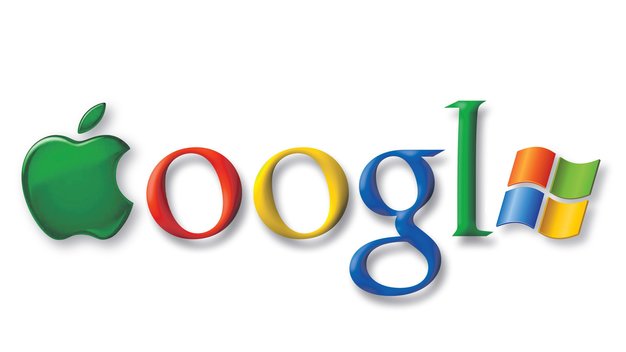
Technology has been a big part of my life for more than 30 years. Challenging technology and ponder new ways to utilize its potential is a hobby of mine. I often come in contact with new gadgets and I will try to share my thoughts about them and the way they will impact our life on this site.
Showing posts with label microsoft. Show all posts
Sunday, 4 November 2012
Smartphone future - mobile OS or mobile manufacturer
Looking at what has been going on over the last 6 to 8 months, a picture seems to be forming about the smartphone markets future. Just a year ago everybody where talking about the three part mobile OS race, it now seem that everybody should be talking about the three part phone manufacture race. A year ago there was Apple on the one side and Samsung, Motorola, HTC, LG and ZTE on the other side. This is changing and changing rapidly. Motorola, HTC, LG and ZTE are not gone, but on the other side they do not sell anything like the units of Apple and Samsung.
Motorola never really got into the smartphone race. They had every chance. First they got a deal with Google to launch Google’s tablet series, and later when Google ended up buying them. Google decision not to build on the Motorola potential, will be the death of them.
HTC had a wonderful run back in the beginning of 2011. But they got greedy and customers jumped ship. They came back in a big way with the One series, but Samsung had had time to scoop up HTC customers and HTC could not get them back. HTC is now in free fall, and trying to regain some momentum by returning to the late 2011 dayes by pumping out new phones. I do not see how that is going to help anything.
LG was on the way out of phones all together, but landed a deal with Google to make it’s latest Nexus phone. LG never had it in them to build a good smartphone, and the first reactions to the Nexus 4 seems to be telling the same story.
ZTE, and Huawei, are still wildcards. They are big in their local markets, but they are having a hard time making it in Europe and the US, mainly due to Samsung’s success. I expect that they will continue to make large dents in the Android market, but only on their home turf.
So where does that leave the Smartphone market? Apple is not moving aside. As long as consumers keep loving the brand and the iOS user experience, Apple will have a long and very profitable run. Samsung seems to be the Android market by now, and the only company that can match Apple in units sold. The huge success of the Galaxy S III and the Note II just seems to have no end.
Is Microsoft a contender? They want and need to make the Windows 8/Windows Phone 8 ecosystem popular. I’m sure that Windows 8 will do okay, but Windows Phone 8 is in trouble even before it’s really launched. Microsoft has HTC, Nokia and Samsung backing WP8. Nokia has the most units out there, with 3 models. HTC has two and Samsung has made one model.
Nokia’s future depends on WP8 taking off, and it’s my personal belief that they are not going to make it. They do have the best WP8 phone out there, in my opinion. Nokia’s problem is that in the most important market, the US, they just do not have the brand to pull through. HTC, by now, is almost as dependent on the success of WP8 as Nokia. They have a brand, also in the US, and very good phones It makes sense for Microsoft to back them as much, or even more, as Nokia. Samsung is in Windows Phone just to be there. They do not need the business in the same way Nokia and HTC does. It also shows on the phone. It’s in no way as innovative as the others.
Microsoft has to make WP8 break into the dual digits market share through the sales of Nokia and HTC. It’s going to be a long and expensive drive. Nokia will not have the money for this, unless Microsoft gives them more or end up buying them. I don’t see that happening. HTC might have the money to do it, but I don’t belive they have the guts to stay in there. They will need to start making money long before WP8 will start bringing it in.
This leaves Microsoft itself. The Nokia/HTC situation I just described above leads me to think that there just might something to the rumors about Microsoft doing a Surface Phone. It makes a lot of sense. Buying Nokia is too much of a hassle and as hard as it might sound I think what Microsoft is planning to do is wait. They will put out it’s own phone and then buy up the bits of Nokia that adds value, ones Nokia files for bankruptcy.
I believe that in another 12 months we will not be talking about a three mobile OS race, but about the Apple, Samsung and Microsoft smartphone race.
Labels:
android,
apple,
HTC,
ios,
manufacture,
microsoft,
mobile future,
nokia,
os was,
samsung,
windows phone
Sunday, 7 October 2012
Nokia - It's hard to keep smiling
I have always been a huge Nokia fan. The first phone I owned was a Nokia 1011. Nokia simply knew how to build a great phone. They still do. Nokia’s problem has always been in software. That was why I saluted Nokia’s choice to partner up with Microsoft and bringing Windows Phone in as Nokia’s primary smartphone OS. They spend 8 months developing apps, helping Microsoft with maps, and designing a series of groundbreaking phones with the Lumia models.
Sadly Nokia’s Lumia series never gained any real momentum. Why this is I do not have the insights to fully speculate about. My guess is that the Nokia and Microsoft partnership ran into trouble shortly after the Lumia series launch and that whatever the disagreement was about it never got settle. Nokia seemed very alone in pushing Windows Phone. It became clear why Microsoft had held back, when they announced Windows Phone 8. I stayed on Nokia’s side even then and wrote in a comment on Google+ that the platform change would not hurt Nokia’s Windows Phone 7 sales that much. I still do think that it did not hurt them that much. The real damage was that sales were so low that it was hard to tell the difference.
I would love to still be on Nokia’s side. The new Lumia models look to be the best of the new Windows Phone 8 devices out there. But Nokia is in trouble, and in more ways than one. First they lost the full backing of Microsoft. Now they have to sell their headquarters to bring in cash, and on top of that Nokia’s smartphone marketing director is leaving. That is not all – this week it became known that Nokia is being dumped by Denmark’s largest telecom TDC. The reason is said to be Nokia’s lack of marketing funds to push Windows Phone. I know that Denmark is not a very large market, but that just underlines the trouble Nokia is in. A small market like Denmark should not require a very large sum to support.
Many would say that the signs have been there for a very long time, but even I am now beginning to believe that this might not end well. Nokia is in trouble, and I believe from what I’m seeing that they are in the kind of trouble that you do not survive. There is nothing that I would like more than to see Nokia pull through this, but without the full backing and marketing machine of Microsoft, I just do not see that happening.
Who is to blame for this? I’m not sure. I believe that both Nokia and Microsoft have a part in this. It’s just very hard to blame Microsoft for wanting to secure the success of Windows 8 and Windows Phone 8. Nokia did not deliver on Windows Phone 7. They did not sell the number of phones Microsoft needed and because of that Microsoft partner up with HTC, who also badly needed a strong partner. So even if the Nokia Microsoft marriage seems like a deal made in heaven, it just wasn’t meant to be. Nokia it’s been great knowing you.
Post referenced above (all in Danish)
Microsoft og Nokia samarbejdet - Det helt rigtige valg
Nokia og Microsoft-samarbejdet fejrer 1 års dag – et kig på hvad der er sket
Er Nokia døende, eller er der stadig håb?
Labels:
endgame,
fan,
love,
lumia,
microsoft,
nokia,
rip,
tdc,
trouble,
windows phone 7,
windows phone 8
Sunday, 18 December 2011
The battle of the eco-system - The death of Android
Google’s Android seems unstoppable right now. It’s the biggest mobile OS in the US and it just surpassed Symbian in India, a country where Nokia have reigned supreme for many years. It’s hard to imagine that this flight toward total market domination could crash and burn any time soon, but there are indications that Google could lose momentum in its fight to stay on top.
The first indication is the obvious one. Where Apple is keeping its, rather large, share of the mobile market with only three phones, Google has Android on hundreds of phone. So even if Android is the most used mobile OS in the world, it’s only due to the very large support from mobile phone manufacturers right now. Google will have to make sure that they stay happy with their choice of Android, and many of them do manufactur phones with others mobile OS’s.
The next two indications both come from what we have seen and heard about Andorid 4 (ICS). First installment is Android 4 as a mobile OS. Despite the fact that everybody that have tested it says it’s the best version of Android by far, they also state that it’s still not at easy to use as iOS. The learning curve is a lot steeper on Android and will discouraged a lot of users from picking Android as their next Smartphone OS. The other learned fact is that Google with Android 4 decided to focus on the mobile experience and leave the tablet part of the OS mostly like it was on Android 3.2 (Honeycomb). The reason this is bad for Google is because Android 3.2 never gained traction against the iPad, mainly because it’s maybe even harder to learn then Android 2.3 (Gingerbread), and that is not a good place to be. So where Apple is adding important new features in their latest release iOS 5.0. Google is still trying to fix the user experience with their release, Android 4.
Next up is the eco-system Google has to offer. Google has a mobile OS, a tablet OS and a desktop OS, just like Apple and Microsoft has. On top of the important three OS’s Google has an impressive amount of services. So what is wrong?
The OS’s
Microsoft has the biggest desktop OS, Apple has the biggest tablet OS, and Google has the biggest mobile OS. The problem is that Apple’s desktop OS is doing quite well, Microsoft is building its tablet OS on Windows, and nether of Google’s other OS’s is doing any business.
The services
Google has the biggest search engine, Apple has the biggest music and app store and Microsoft has the biggest gaming platform. The problem is that Apple either has, as good a service or hooks into Google’s service better than Google does and Microsoft owns the platform for cooperate use.
The future in the mobile space is going to be all about the eco-system. Not just in app, music, movie and book purchase, but also access to the content you created or bought. Here Google only have Android as a mobile OS to deliver this experience to the costumer. Apple has iOS that are a success on both the mobile and tablet platform, and they have MacOS the desktop OS of the second largest manufacturer of Personal Computers. Microsoft owns the desktop both for the consumer and the business user. They are soon launching Windows 8 that manage to tie together Windows, Xbox Live, Windows Phone and the Windows server platform.
If the future is all about the eco-system, Google is going to have a hard time explaining to their OEM’s why they should stay with Android. Logically none of them can get into the Apple eco-system, but most of them knows the Microsoft eco-system and could easily change. Some of them might even think that it’s better to try something new, and go with WebOS or something else.
The bottom line here is that Google, if they want to stay on top of the mobile OS game, also have to focus on the tablet and desktop experience. They need to get developers to make great apps for tablet Android, kind of like that Google is doing on ChromeOS. I know ChromeOS is dead in the water, but that might just be because it’s a little ahead of its time. They need to make sure that they deliver top-of-class integration into their own services, way better than Apple and Microsoft, and they have to make sure that they or third party developers deliver near perfect integration into the Microsoft server platform. They have to fix the first time user experience and update the UI to better guide the user, and they need to make sure that an Android user can easily get to music, movies and books without having to turn to Amazon and the Kindle Fire. Then Google will be able to stay on as the biggest in the mobile OS arena.
Monday, 28 November 2011
The Cloud vs. Mobile OS - App or HTML5
| HTML5 vs. local app |
The future is in the Cloud. That’s what everybody has been saying for a long time. Some of this is here already. Google Apps and Microsoft Live are two of the biggest cloud based services and the ones closed tied to a mobile OS. The reason I focus in on the mobile OS is that this just might be where we will see most interesting collaboration between the client and the Cloud.
It was my belief that we would see a fairly quick move from the standard app and program to a HTML5 based app type. They would be easy to keep updated, customers would not have to update all the time, and the pricing model could be anything from full payment upfront to a pay per minute. There are services that are based in the Cloud, but on phones all of them seems to have versions running as an app. This is mainly due to two things, small screens and lack of full HTML5 support by the mobile browser. So they build a mini client for the Cloud based service. Most often you’ll find that the app will have only a small portion of the functions the browser based version have. This again is also primarily due to two things, screen resolution and processing power.
Faster processors and large screens with desktop like screen resolution is finding its way into our future Smartphones. The questions is will this new found power and space be used to bring better browsers with HTML5 support or to build better apps that will deliver full functionality of the Cloud service on to the phone? There is no doubt that both will happen, but will the new and better browsers on the coming Smartphones be used to run the cloud based HTML5 apps or will the native app grow and slowly turn into, not just a dumb client for the service, but a full featured version of the Cloud service?
I believe in the latter, and the reason for this is that a native app far better can harness the power and screen size of the target device. The native app will be able to check screen size, processing power, screen resolution and if any external devices are connected, and adapt to use all this. This something a HTML5 app do not have access to, it depends on the browser to present the user interface right. The native app can change depending on if the phone is used in landscape or portrait. It can detect if an external monitor is connected and again change the UI to fit the bigger screen. Apps like this will make the future Smartphones come alive as a productivity device in ways we have not seen yet and therefor set new standards for the way we work and play on Smartphones.
I’m certainly not declaring the Cloud dead for mobile users, but for the mobile user the Cloud in large parts will be used as a storage and sync place, and the creating and presentation of the information will happen in a intelligent app running locally on the smartphone.
Labels:
app,
appstore,
cloud,
google,
html,
html5,
live,
market,
microsoft,
mobile,
smartphone,
smartphones
Subscribe to:
Posts (Atom)